
Contact us by phone
Service available 24 hours a day, 365 days a year.
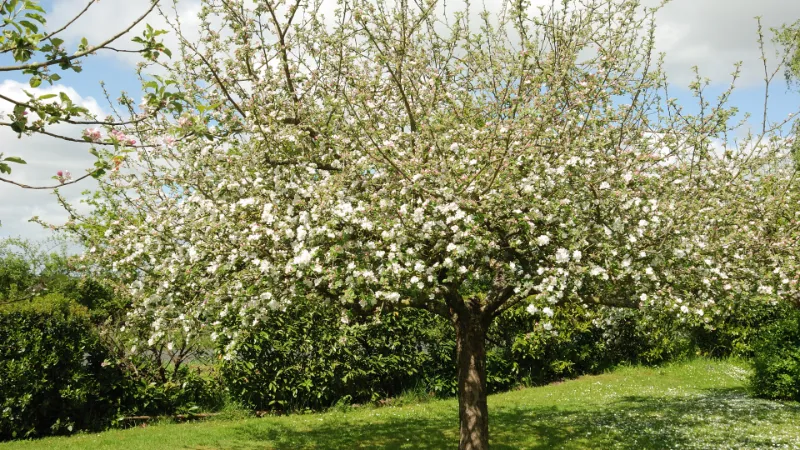
We all love watching cider being poured—and even trying it ourselves. But the fact that apples, before becoming a drink, already bring joy is less widely known. In Asturias, in the Comarca de la Sidra, during April and May, the countryside turns white and pink with blooming apple trees.
To enjoy this spectacle, simply head to this region. It stretches from central to western Asturias and from the coast to the mountains, including Bimenes, Cabranes, Colunga, Nava, Sariego and Villaviciosa. Visit during the May bank holiday, when they celebrate the apple blossom—locally known as the Floriar del Pumar.
The celebration includes a programme of activities across the different towns, such as guided tours of blooming orchards (pumaradas), an astronomy workshop to prepare for the August solar eclipse, cider-pouring classes, and guided visits to the Cider Museum. You can check dates and schedules on their website.
Where to stay: For this floral getaway, we’d add a slightly urban touch and stay at Sercotel Ciudad de Oviedo. It’s just a 30-minute drive from the cider region, and once in Oviedo, parking won’t be a concern—we have it covered. You’ll also find spacious, comfortable, quiet rooms filled with natural light. Mornings start with a generous buffet breakfast.
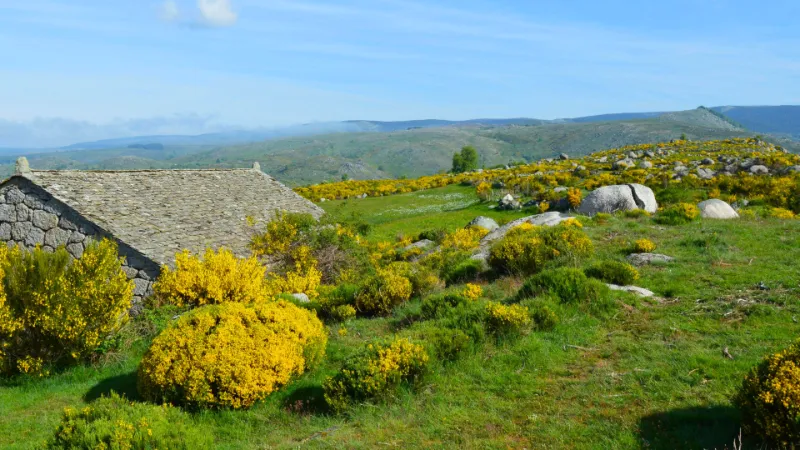
When we think of blossoms in Spain, we often think of trees. What makes broom bloom so special is that it comes from a shrub with small but very abundant leaves that, in May and June, paint the slopes of the Sierra de Gredos in a vibrant yellow full of life.
We’re talking about 65,000 hectares where up to 23 varieties of broom bloom, filling everything with colour and fragrance.
We encourage you to drive along the AV-941 road and stop at one of the 60 viewpoints you’ll come across along the way. Combine this with some hiking—keep in mind that in some areas you’ll be inside the Sierra de Gredos Regional Park—and with visits to villages like Navacepeda de Tormes, which still preserve their traditional mountain architecture. And in all of them, you can enjoy the region’s cuisine: chuletón de Ávila, migas al pastor, patatas revolconas…
Where to stay: After enjoying the broom in bloom, don’t miss another view: the best-preserved medieval wall in the world. It’s located in Ávila city, and from our Sercotel Cuatro Postes, it looks especially stunning. You can admire it from your room or from the restaurant terrace while enjoying local gastronomy.
Just imagine how famous—and beautiful—it must be that the sunflower bloom in Carmona attracts thousands of international travellers every year (some even from Japan). This Sevillian town has more than enough charm to win over anyone who visits it: the Puerta de Sevilla Alcázar, the Santa María Church, the elegant Puerta de Córdoba, and the ever-inviting Plaza de San Fernando.
And if we talk about irresistible things, the gastronomy of Carmona deserves a mention, where vegetables take centre stage and dishes like gazpacho, wild asparagus with egg, or tostá with manteca colorá and pork loin are especially popular.
As if that weren’t enough, by late May, sunflowers begin to bloom, and the explosion of beauty knows no limits. We’re talking about 74,000 hectares where large yellow flower heads appear until mid-June. The landscape invites you to walk among the fields or follow photography routes to capture every detail.
And if you need one more reason, if your visit coincides with the third week of May, you’ll likely come across the Feria de Carmona.
Where to stay: Carmona is just a 30-minute drive from Sevilla, where we’ll be waiting for you at Sercotel Sevilla Don Luciano, Sercotel Las Casas de los Mercaderes, Sercotel Sevilla Guadalquivir Suites and Sercotel Doña Carmela. Each has its own style, but all share the same goal: making you feel even better than at home.