Zaragoza during the Fiestas del Pilar is one of those experiences everyone should have at least once in their lifetime. Those who have been know exactly what we mean. And those who haven’t can get a taste of what awaits with this guide to making the most of a city that is always bursting with life, but reaches a whole new level of energy and excitement as 12 October approaches. Check in at Sercotel Plaza Feria and don’t leave without your cachirulo.
The cachirulo is the black-and-red checked scarf you’ll see everyone wearing: some tie it around their neck, while others wear it around their wrist. You might also spot it hanging from a belt or being used as a hair tie. Your outfit, your choice. And it’s also up to you where you head first. Although activities and events take place throughout the city, we recommend starting at Plaza del Pilar. This is where, at the foot of the Basilica, (almost) everything happens.
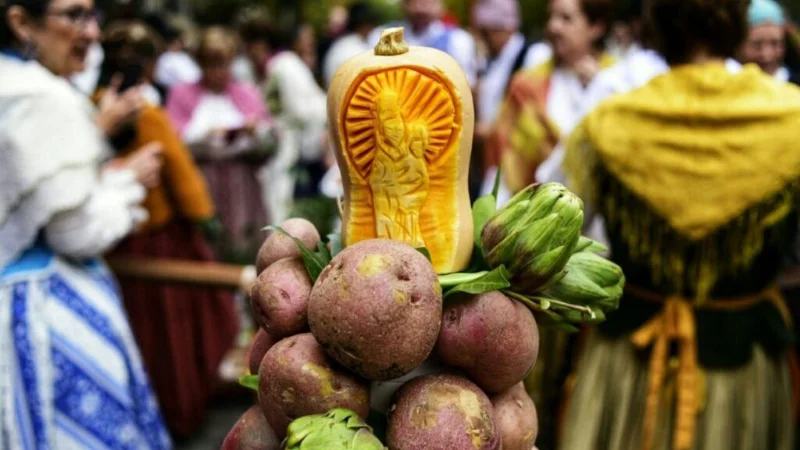
From the opening proclamation to the famous Offering of Flowers on the 12th, when thousands of people make their way to the foot of the Virgin’s floral mantle, many dressed in the traditional regional costumes of baturras and baturros. In between, free concerts featuring Spanish, international and local artists fill venues across the city with music.
And these aren’t the only concerts bringing Zaragoza to life during the festivities. José Antonio Labordeta Park, the Estación del Norte and other venues around the city host performances to suit every taste. Over at Espacio Zity, located at the fairground, the line-up is usually well worth buying tickets for. Check the official programme before your visit to find out which artists will be performing each year.
And yes, you read that correctly: there is a fairground, complete with food stalls where you can try the baked potato that has become an absolute must, as well as, of course, plenty of rides for adults and children. Because the Fiestas del Pilar in Zaragoza also give younger visitors the chance to discover and enjoy local traditions. And they certainly won’t want to miss the Tragachicos. This enormous figure of a baturro has a wide-open mouth that children enter before sliding down a slide. You’ll need to keep track of it, as it usually moves between different neighbourhoods.
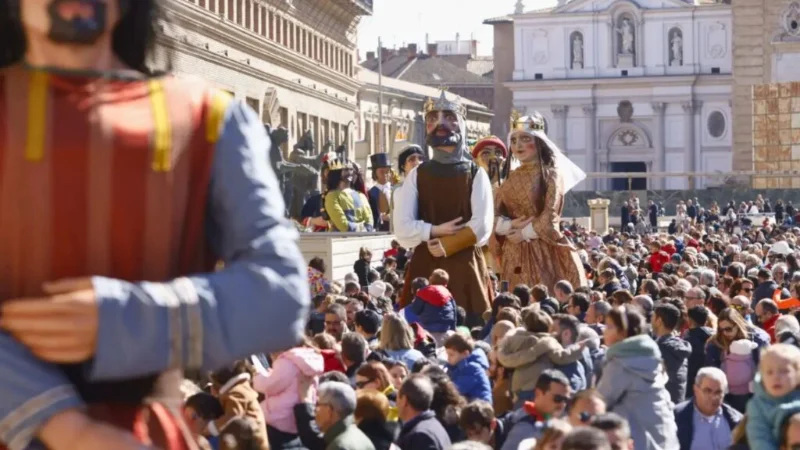
Another attraction that travels around the city — and is bound to delight them — is the Zaragoza Troupe of Giants, Big Heads and Little Horses. Its history goes back a long way: to 1807, to be precise. That was the year in which the first references to a family of four giants and big-headed figures were recorded. Today, more than two centuries later, the troupe is made up of dozens of figures that parade through the streets to the sound of music and festivities.