If this UNESCO World Heritage Site looks beautiful from a distance, just wait until you see it up close. Start with the city walls. Their origins date back to Roman times, although their present-day appearance is mainly medieval. They stand an average of 12 metres high and feature 87 towers. You can explore part of their perimeter from above by walking along the wall-walk, before completing the final stretch at ground level, alongside their base. All the while, you will catch glimpses of the treasures hidden within Ávila.
One of these is the cathedral, whose most unusual feature is that its fortified apse forms part of the city walls. In fact, it is a unique example of military and religious architecture being combined in a single building. When you visit, you will also be standing inside Spain’s first Gothic cathedral. And the fascinating facts do not end there: its magnificent stained-glass windows were damaged by the Lisbon earthquake of 1755, meaning that some had to be rebuilt, while Adolfo Suárez is buried in the cloister.
Afterwards, wander through the city’s cobbled streets, passing traditional Castilian houses, palaces, Romanesque churches, basilicas and convents. Stop for a while in Plaza del Mercado Chico and, from all the sights on offer, choose the church standing right in front of you: San Juan Bautista Church. Teresa de Cepeda y Ahumada was baptised here. You may know her better as Saint Teresa of Ávila.
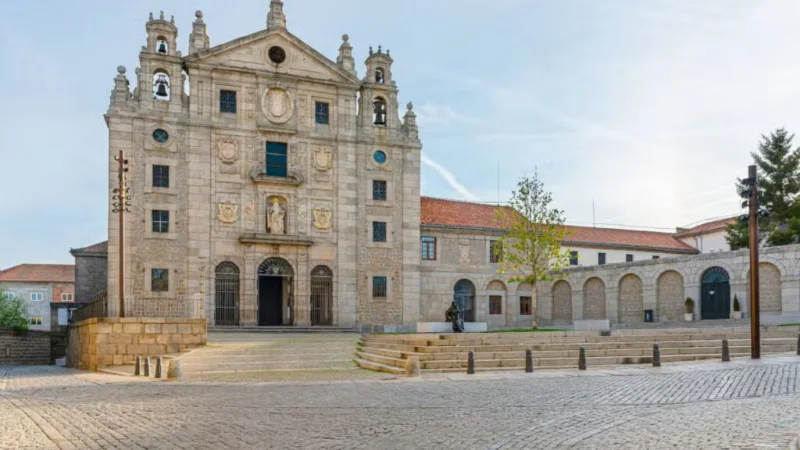
It has taken us a while to mention the city’s patron saint. To learn more about her, visit the Basilica of Saint Teresa. Built on the site of her birthplace, it also houses a museum beneath the basilica.